Showing posts with label race. Show all posts

Sunday, June 13, 2010

Racebending and Ethnicity Issues in Hollywood


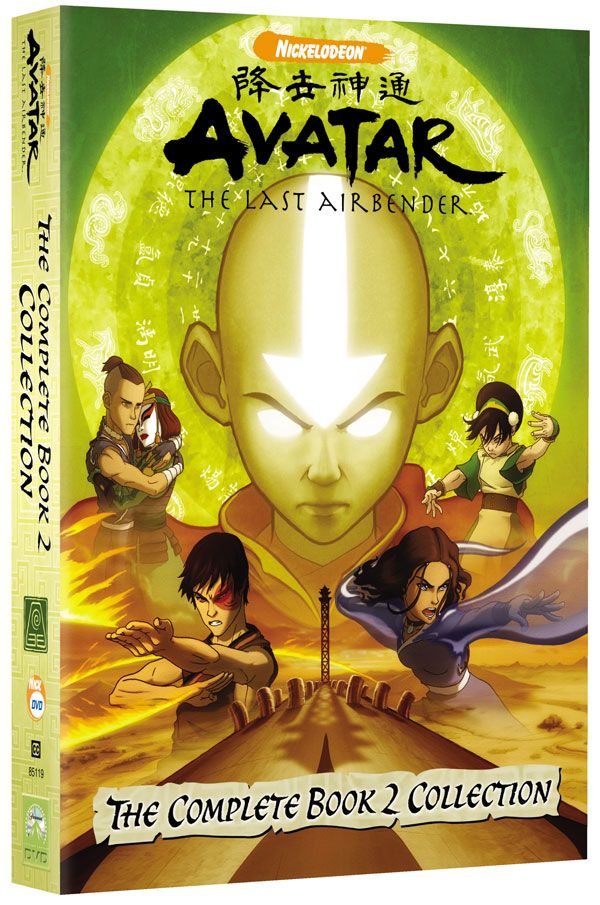
If you haven't read my earlier essay that discussed Avatar: The Last Airbender, allow me to fill you in on some of the show's core concepts - by quoting the monologue that begins every episode:

"Water.. Earth.. Fire.. Air.. Long ago, the four nations lived together in harmony. Then everything changed when the Fire Nation attacked. Only the Avatar, master of all four elements, could stop them but when the world needed him most, he vanished. A hundred years passed and my brother and I discovered the new Avatar, an airbender named Aang. And although his airbending skills are great, he still has a lot to learn before he's ready to save anyone. But I believe Aang can save the world..."

So that's that. It's a pretty straightforward epic fantasy story, albeit extremely well-done for a kids' show. Now, the animation style is strongly influenced by Japanese anime rather than "typical" American animation. However, in addition to that, almost every element within the series' universe is borrowed from various Asian cultures. The written language of all four nations is Chinese calligraphy - a point which the producers felt was so important to get right that they hired an expert. Each nation has its own form of martial art/elemental control, each of which is essentially a real-world Asian martial art with magic added: Airbending is Bagua, Waterbending is Tai Chi, Firebending is Shaolin, and Earthbending is Hung Ga. They got an expert for that one, too. In terms of visual culture - architecture, clothing, hairstyles, and even skin tones - the Fire Nation resembles primarily Tang Dynasty China, the Earth Kingdom draws from both Qing Dynasty China and Korea, and the Air Nomads are mostly Tibetan-inspired. The Water Tribe, which is mostly informed by Inuit culture, is kind of the odd one out. Even so, can we agree that the show has very little caucasian influence, aside from the language spoken? Good.

....But now they're making a movie of it, and things are going awry.

Saturday, May 15, 2010

Ownership & Appropriation, Part V: Conclusion


            As I hope these examples have shown, appropriation in art cannot be labeled as either wholly ethical or wholly unethical. After all, appropriation of one sort or another has led to revolutionary and changes in the Western conception of art in several ways, so it is irresponsible to ignore its cultural importance. There are, of course, unethical ways of appropriating art. Direct plagiarism – passing off another person’s creation as your own – is generally agreed to be reprehensible. There are also instances of one culture disrespectfully using another’s art for their own profit, such as Picasso’s refusal to acknowledge his African influences. Even appropriation within a single culture can be a dishonor to the original source, such as the totem pole imagery used in some Native American casinos. This does not change the fact that appropriation can be done respectfully and without infringing on the rights or traditions of others. Intent is a crucial element in determining the morality of appropriation. When people like Warhol and Prince alter an existing photo, they make no effort to pass off the photo as their own - they simply want to use it as raw material for sending a message. The Impressionists were not trying to replace Japanese art with their own, but instead to expand their artistic vision. In The Secret of Kells, Tomm Moore takes much from the Book of Kells and rewrites its history, but does so out of respect for the book’s importance to art and his cultural heritage. If I take a photograph of graffiti in an alley, I am in no way trying to tell people that I can create interesting art with a spray can; I am merely showing them what interests me in the juxtaposition of beauty and grittiness in the urban environment. In most of the examples analyzed in this paper, my judgment is that the appropriators were not trying to steal another’s art, or to become rich and successful without doing any work. They saw someone else’s art and believed that they could do something new, inspired, important, and unique with it. The poet Audre Lord once said “There are no new ideas. There are only new ways of making them felt.” The quote may be somewhat cynical, but I believe it lends credence to the idea that appropriation can be an acceptable way of expanding one’s artistic sphere. Much of the artistic appropriation seen in recent history can be attributed to this idea. So, if an artist takes his cues from an existing piece of art, or the art of another culture, or that of his own culture, we as viewers should consider his treatment of that original before condemning him.

* * *

...And that's my senior project! The essay part of it, at least. Looking back on it, even just a few weeks later, I can see things I want to change - like the implication that the Seven Cedars Casino and The Secret of Kells are indicative of the entire Native American and Irish cultures' take on appropriation. But...ah well, I wanted to post it in its natural state. Hope you enjoyed it!

Bibliography after the jump, if you're at all curious!

Thursday, May 13, 2010

Ownership & Appropriation, Part IV: Appropriation of One's Own Cultural Style

Click the jump for the fourth part of the essay!

Photograph of totem poles depicting family crests.


Tuesday, May 11, 2010

Ownership and Appropriation, Part III: Appropriation of Others' Cultural Styles


Click the jump for the third part of my exploration of appropriation!

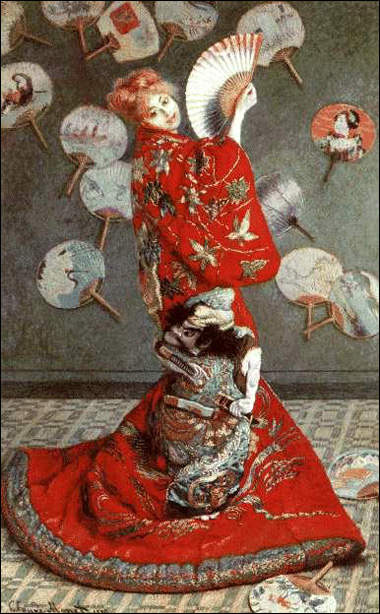
 Monet - "La Japonaise"

Sunday, May 9, 2010

Ownership & Appropriation, Part I

I am going to break my RC Arts & Ideas senior project essay into chunks and upload each section as its own blog post. This is the beginning. Enjoy!

* * *


Art is everywhere, and you need not visit a museum to encounter it. The billboards along the highway, the shows we watch on television, the graffiti in the alleyway; it is impossible to live a day in a modern life without experiencing someone’s creative output in some way or another. Whether this art entertains us. annoys us, or simply slips under our radar, it affects our lives deeply. Our society, personal tastes, and culture are shaped by it. It may be this ubiquitous influence of art upon us that leads to questions of ownership, appropriation, and creativity. Who owns an idea or an image? How do we define originality? Is it thievery to learn and incorporate the techniques of others? In my opinion, appropriation can be performed in a manner that is ethical and legitimate. If an appropriator pays respect to the original artist, or if the end product sufficiently changes the art’s meaning, appropriation can be acceptable. In this essay, I will examine several types of artistic appropriation, each highlighting a different element of the debate of originality and legal and cultural ownership.